How do I know which size is the better deal?
Divide each price by its size to get the unit price, the cost of one ounce, roll, or load. The smaller unit price is the better deal. That ratio makes packages of different sizes comparable. Stores often print it on the shelf tag, and sometimes the bigger package costs more per unit.
- A per unit
- $0.25
- B per unit
- $0.28
- Better deal saves
- 9.09%
Challenge: Find a case where the smaller package is the better deal. Done!
More settings
Play
Make the big size cost a little more. Find the point where the small one wins.
Challenge: Find a case where the smaller package is the better deal. The box under the picture turns green when you get it.
Stuck? Pick one of the examples from the “Try an example” menu, or press “New example.”
Understand
A price alone can't tell you which is cheaper when the sizes differ. A ratio fixes that: divide price by size and you get what one unit costs.
The boxes are drawn so their area matches the size, and the better deal is filled in. The note at the bottom shows what the other package should cost at the better rate.
Use
Every input has a unit menu, so you can type values in the units you already have. Results follow your units.
Show the work
- Unit price
\text{unit price} = \frac{\text{price}}{\text{size}} - A
\frac{\$5}{20} = \$0.25 - B
\frac{\$8.25}{30} = \$0.275 - Savings, compared with the pricier one
\frac{0.275 - 0.25}{0.275} \times 100\% = 9.091\%
Export
Enter both prices and sizes in the same measure. Open "More settings" to change the label from ounces to rolls, loads, or items.
- Convert first if the measures differ: 1 lb = 16 oz, 1 kg = 1,000 g.
- Coupons change the price, not the size. Subtract them before dividing.
For learning and estimation. Verify with applicable codes, standards, and a qualified professional before using in design, construction, or safety-critical work.
Cheat card
| Symbol | Meaning | Unit |
|---|---|---|
| shelf price | $ | |
| amount in the package (oz, rolls, loads…) |
- Compare the same measure. Convert pounds to ounces (× 16) before dividing.
- Check shelf tags. Stores sometimes use different measures for different sizes.
- A deal only counts if you use it all before it spoils.
Where it’s used
- Finance & Business
Businesses compare suppliers by cost per unit, not by invoice total. - Money & Shopping
Compare a regular box with a "family size" and see which really costs less per ounce. - Cooking
Price out ingredients per ounce or per cup when you plan meals.
Related exhibits
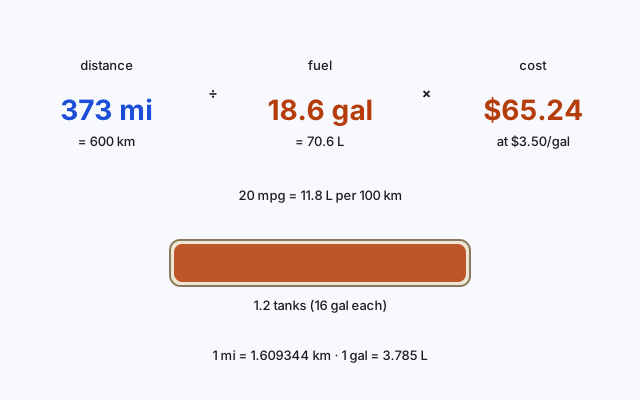 Start here
Road trip math: miles, liters, and dollars
Convert once and the trip adds up: how far, how much fuel, how much money.
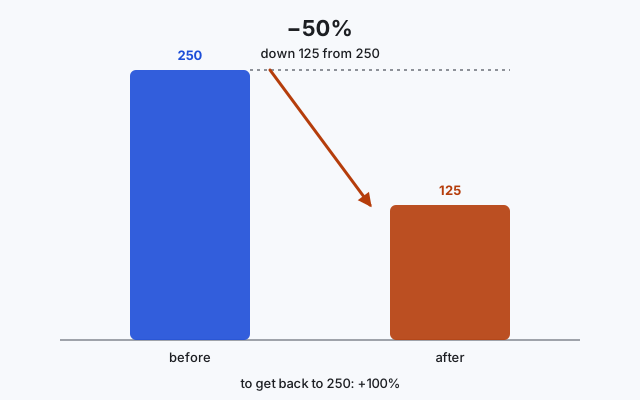 Go further
Percent change: up 50%, then down 50%, and you’ve lost money
A percent is always “of something.” Change the something and the same percent means a different amount.
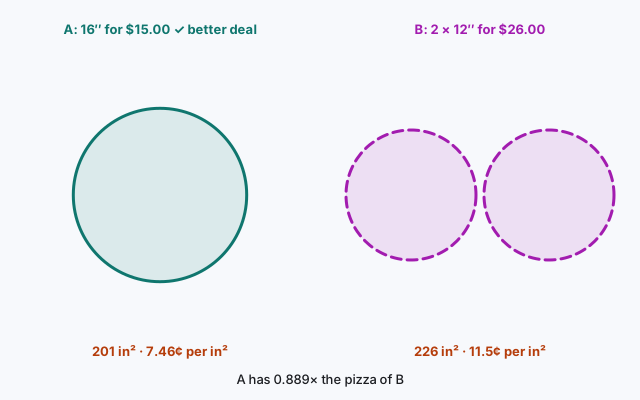 Also try
Pizza value: one large or two mediums?
Area grows with the square of the size. That changes which pizza is the deal.
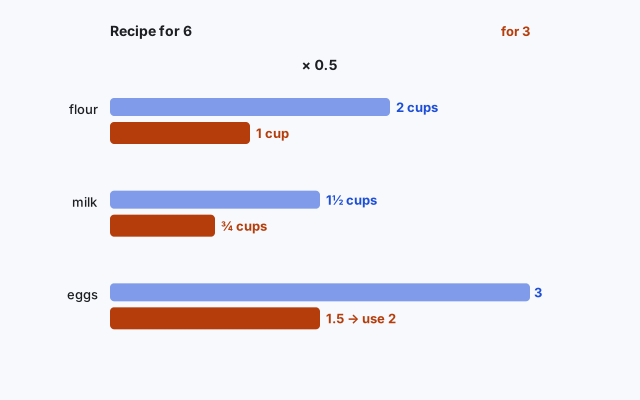 Also try
Scaling a recipe: more people, same taste
Double the guests? Every ingredient grows by the same factor.
Questions people ask
How do you calculate unit price?
Divide the price by the amount. $5.99 for 24 oz is 5.99 ÷ 24 ≈ $0.25, or 25 cents per ounce.
Is the bigger size always cheaper?
No. Stores sometimes charge more per unit for large sizes, especially during a sale on the small one. Always divide to check.
How much am I saving with the better deal?
Subtract the two unit prices and divide by the higher one. If one is 30¢ per ounce and the other is 24¢, you save 6 ÷ 30 = 20% per ounce.