Electrical & Electronics
The math behind circuits, wiring, and electronics
10 live exhibits. Each one already works. Change a number and see what happens.
Open as board Play with these together. Solving one grows related exhibits.
 Linear Equations
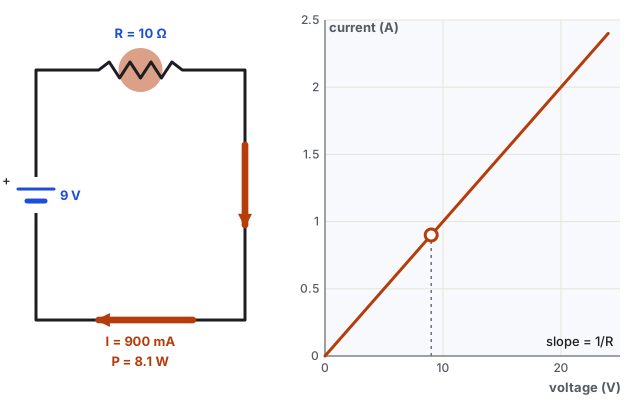
Ohm’s law: how much current flows?
Push harder (volts) or squeeze tighter (ohms), and watch the current change.
 Linear Equations
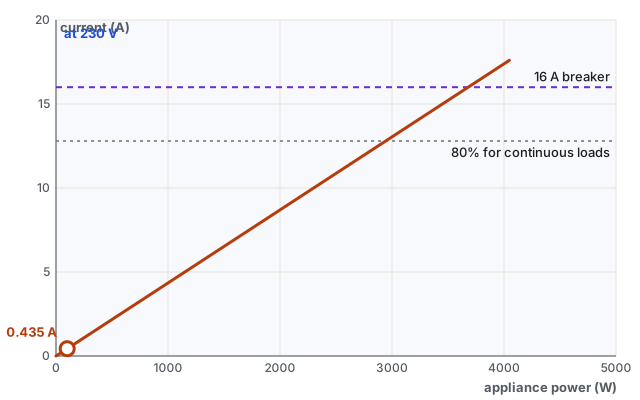
How many amps does it draw?
Watts divided by volts gives amps. That decides the breaker and the wire.
 Ratios & Proportions
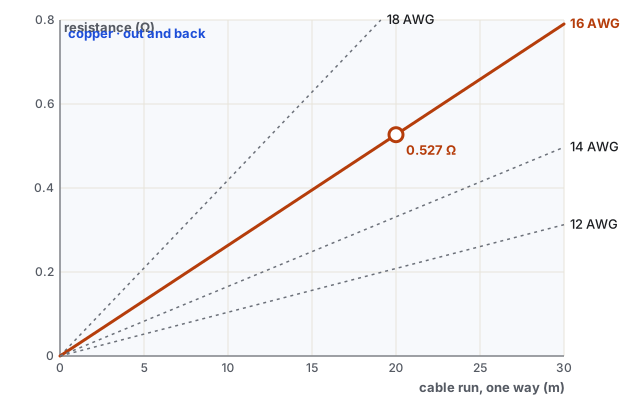
Wire resistance: longer and thinner resist more
Resistance grows with length and shrinks with thickness. Pick the wire that keeps it low.
 Linear Equations
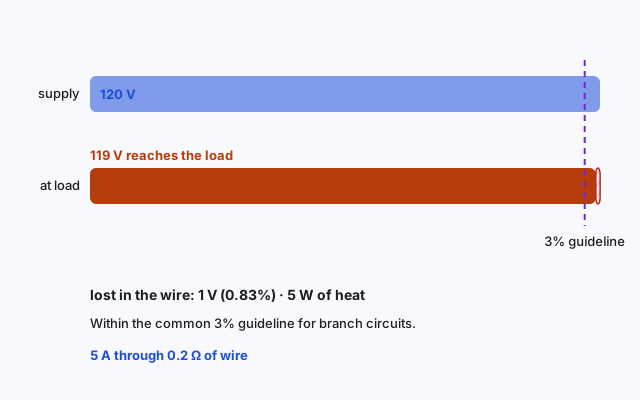
Voltage drop: what the wire takes before the load gets it
Current times wire resistance is voltage you never get to use.
 Linear Equations
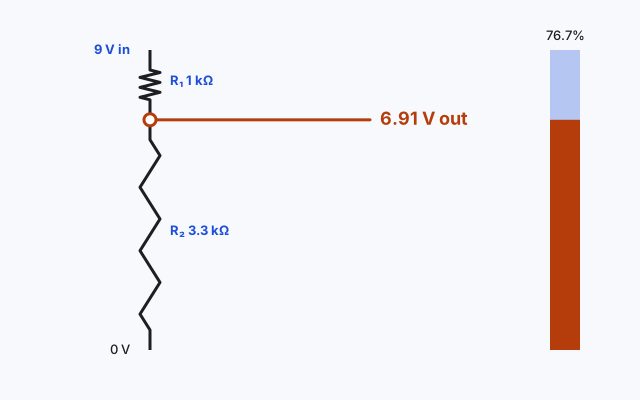
Voltage divider: two resistors make a new voltage
The output is the input times a ratio of resistors, until you connect a load.
 Linear Equations
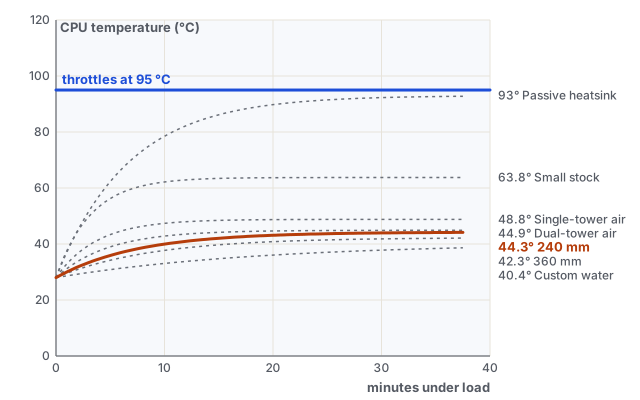
PC cooling: passive, air, or water?
Heat flows through the cooler like current through a resistor: temperature rise = watts × °C/W. Water adds mass, so it heats up slower.
 Trigonometry
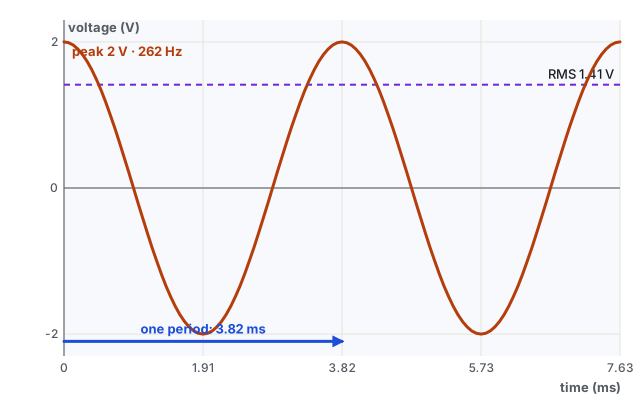
Sine waves: wall power and musical notes
The outlet and a tuning fork follow the same curve: amplitude, frequency, and phase.
 Linear Equations
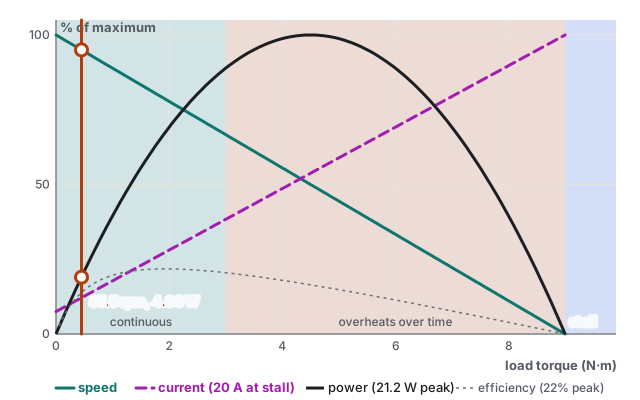
DC motor torque–speed curve: where it runs, peaks, and stalls
Load a DC motor and its speed falls in a straight line to stall. Power peaks at half speed, and efficiency peaks at light load.
 Polynomials
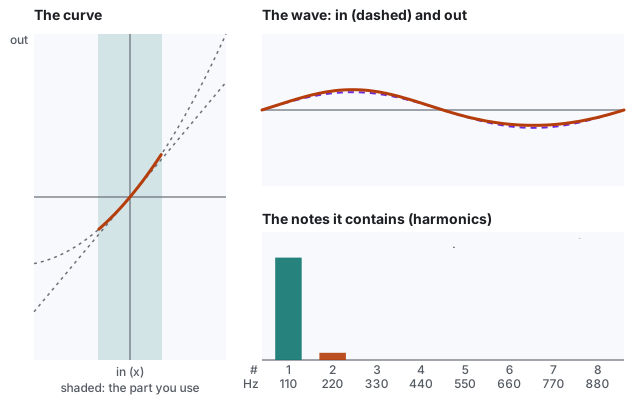
Why a distortion pedal changes the sound: polynomials make harmonics
Push a pure note through a curve like x − x³/3 and new notes appear. The cube is where the extra harmonics come from.
 Vectors
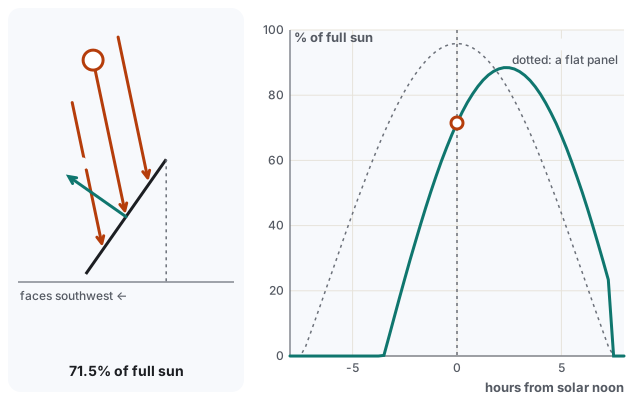
Solar panel tilt: how much sunlight it catches
Point one arrow at the sun and one straight out of the panel. Their dot product is the share of full sunlight the panel gets.