Hobbies & Crafts
Math for makers and tinkerers
27 live exhibits. Each one already works. Change a number and see what happens.
Open as board Play with these together. Solving one grows related exhibits.
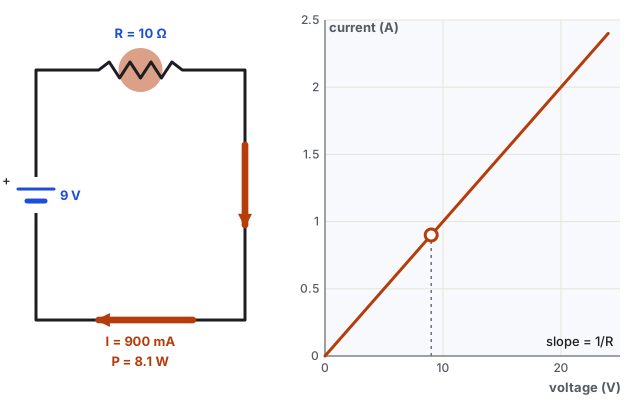 Linear Equations
Ohm’s law: how much current flows?
Push harder (volts) or squeeze tighter (ohms), and watch the current change.
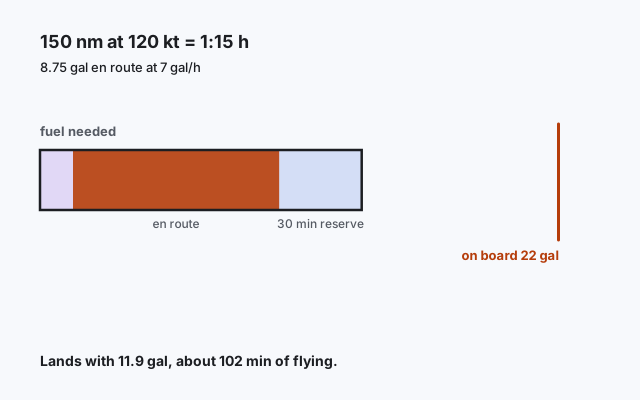 Ratios & Proportions
E6B time and fuel: will it make it with a reserve?
Distance over groundspeed gives time; time times burn gives fuel. Then leave something in the tanks.
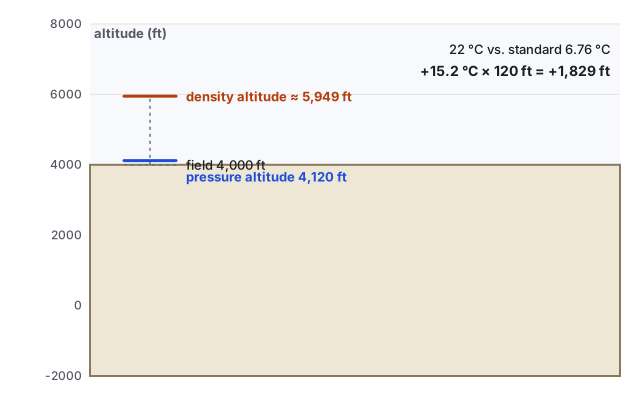 Linear Equations
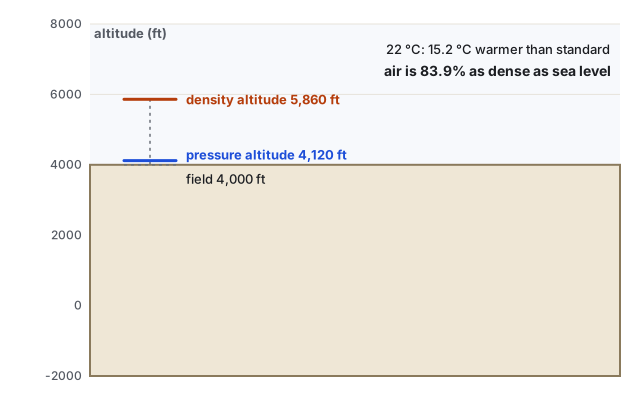
E6B density altitude: the 120-feet-per-degree rule
Pressure altitude, plus 120 ft for every degree warmer than standard. Quick enough to do in your head.
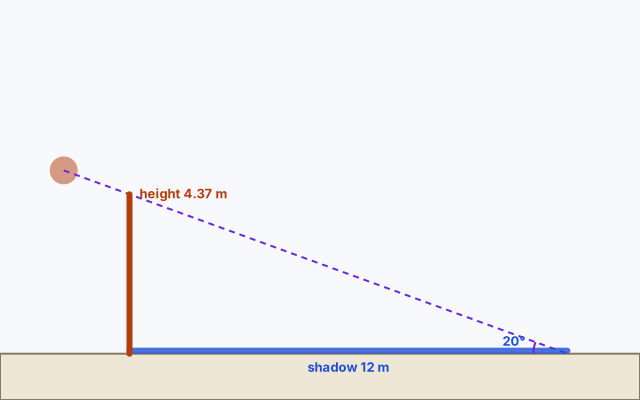 Trigonometry
How tall is that tree? Measure its shadow
One shadow and the sun’s angle give you the height, no climbing needed.
 Linear Equations
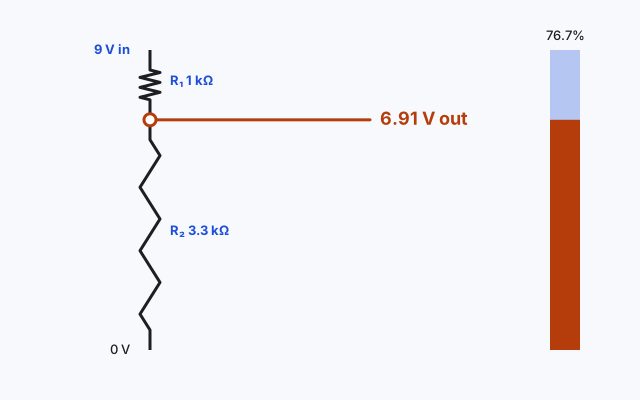
Voltage divider: two resistors make a new voltage
The output is the input times a ratio of resistors, until you connect a load.
 Exponents & Logarithms
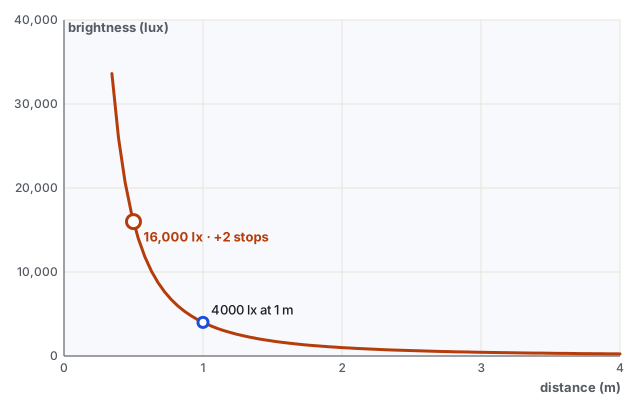
Brightness vs. distance: the inverse-square law
Move a light twice as far and it gives a quarter of the light. Photographers call that two stops.
 Arithmetic & Number Sense
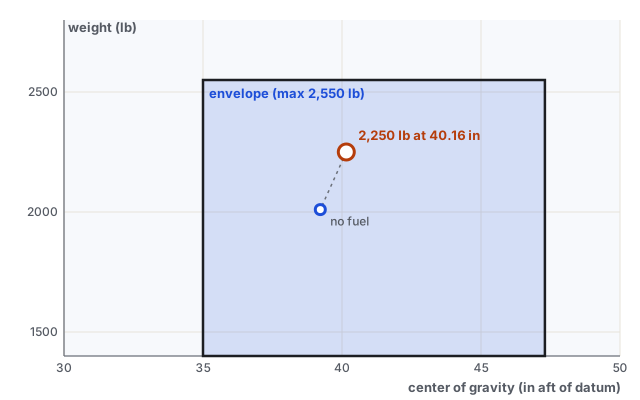
E6B weight and balance: where the center of gravity lands
The CG is a weighted average. Load people, bags, and fuel, and watch the dot move in the envelope.
 Trigonometry
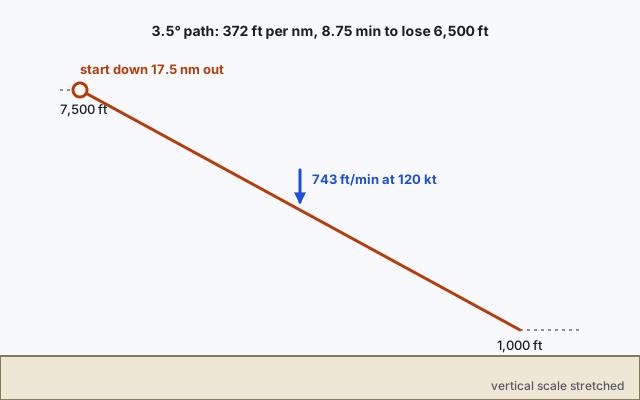
E6B descent planning: when to start down
A 3° path drops about 318 ft every nautical mile. Tangent turns that into a distance and a descent rate.
 Linear Equations
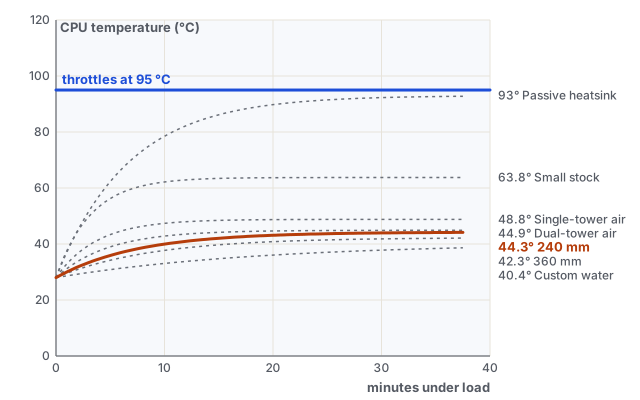
PC cooling: passive, air, or water?
Heat flows through the cooler like current through a resistor: temperature rise = watts × °C/W. Water adds mass, so it heats up slower.
 Linear Equations
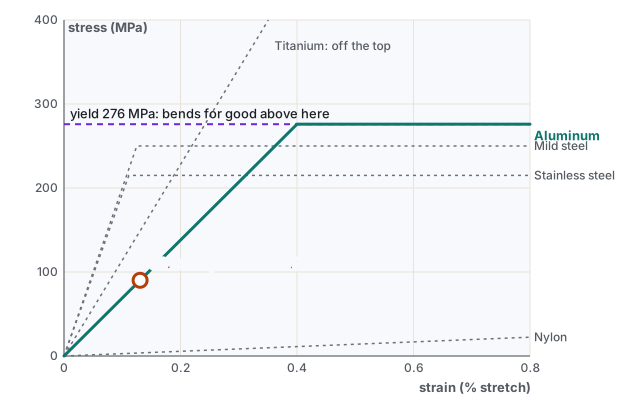
Stress and strain: how much does a rod stretch under a load?
Stress is force per area. Divide by the material’s stiffness and you get the stretch, until it yields and stays bent.
 Ratios & Proportions
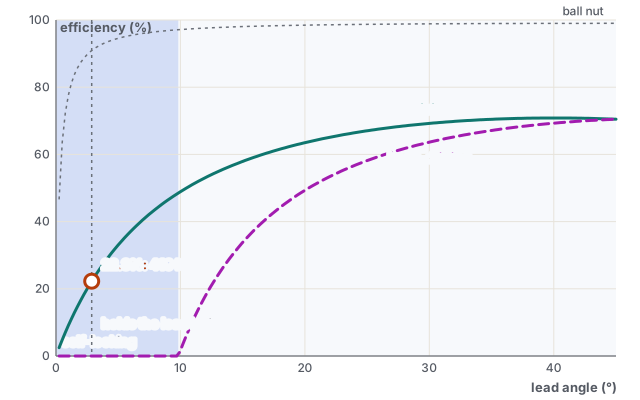
Lead screw vs. ball screw: turning torque into a push
A screw trades turns for force: F = 2π × efficiency × torque ÷ lead. Friction decides whether it also holds the load with the power off.
 Vectors
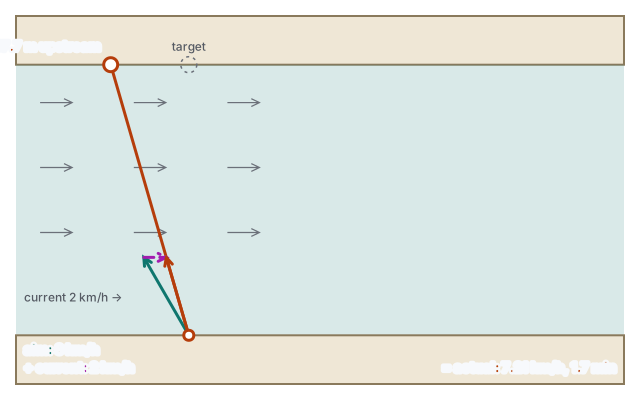
Crossing a river: where you aim vs. where you end up
Your speed and the current add as arrows. Aim straight across and you drift; aim upstream and you can land right on target.
 Vectors
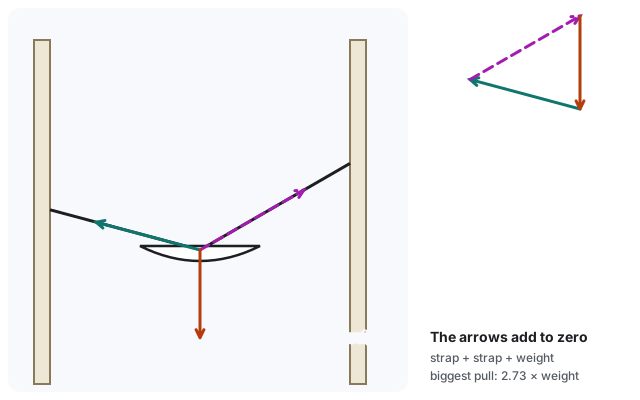
Hanging a hammock: why the 30° rule works
Your weight and the two strap pulls are arrows that must add to zero. Hang it tight and flat, and each strap pulls with several times your weight.
 Probability
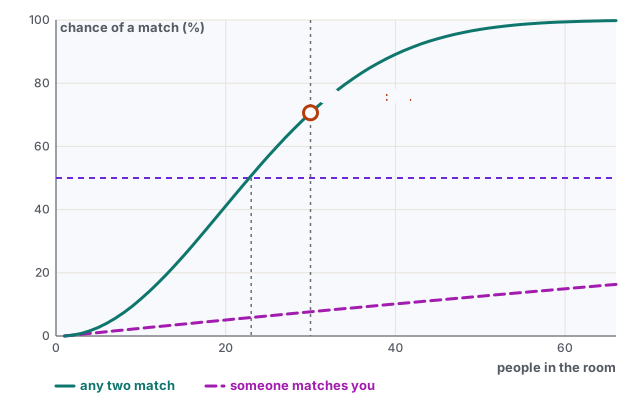
The birthday problem: 23 people is a coin flip
In a room of 23, it’s better than even that two share a birthday. Every pair is a chance, and pairs add up fast.
 Probability
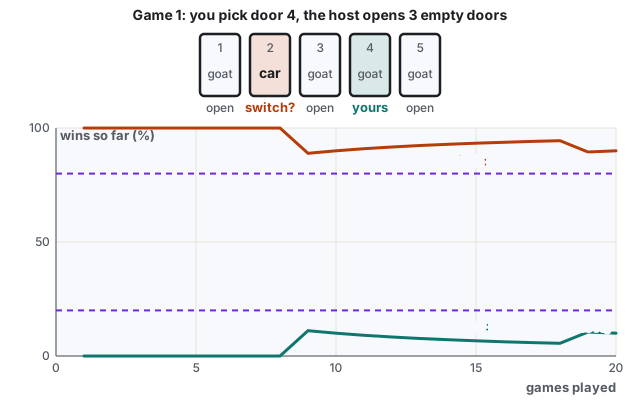
Monty Hall: should you switch doors?
Pick a door, watch the host open an empty one, then decide. Switching wins two times out of three, and here you can watch it happen.
 Exponents & Logarithms
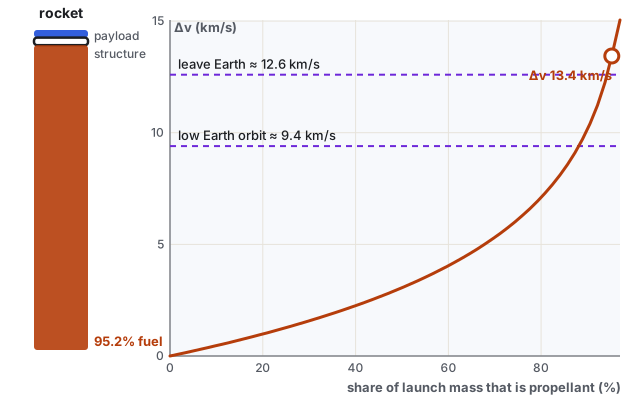
The rocket equation: why rockets are almost all fuel
Speed grows with the logarithm of the fuel. Double the tank and you get far less than double the speed.
 Quadratics
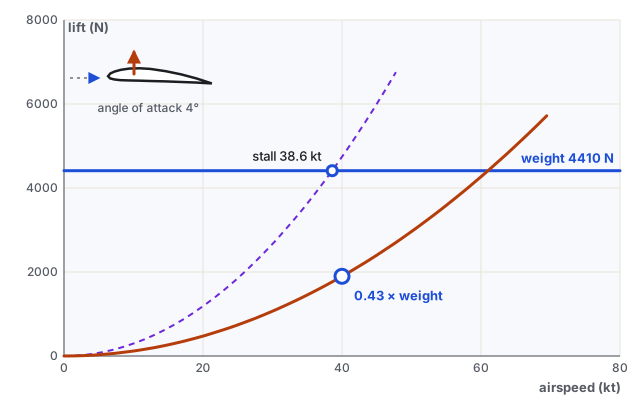
Wing lift: why twice the speed means four times the lift
Lift grows with airspeed squared. Bernoulli, angle of attack, thin air, and the stall, all on one curve.
 Exponents & Logarithms
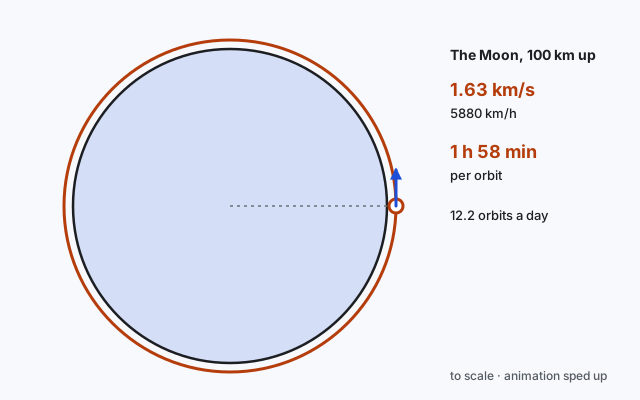
Orbits: how fast to go around and never come down
An orbit is falling and missing the ground. Square roots and a 3/2 power set the speed and the period.
 Vectors
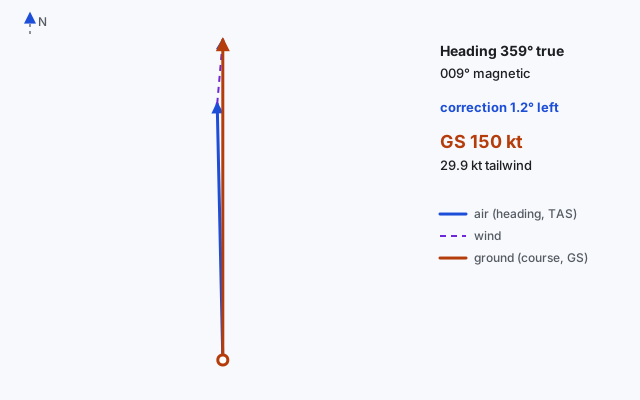
E6B wind triangle: heading and groundspeed
Point the nose into the wind just enough to track your course. Three vectors, one triangle.
 Exponents & Logarithms
E6B density altitude, exact: standard atmosphere and humidity
The full standard-atmosphere formula, plus the dew point. Humid air is lighter, so it flies higher.
 Exponents & Logarithms
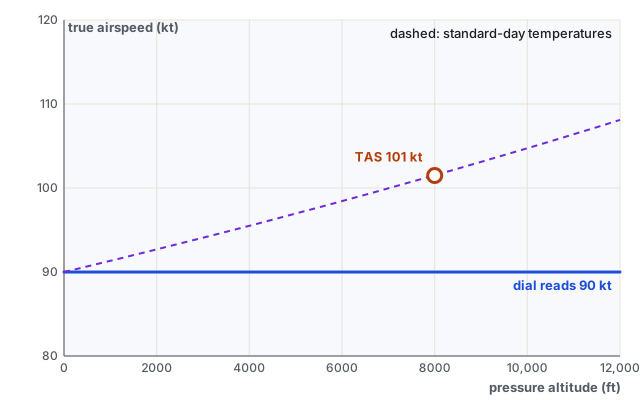
E6B true airspeed: why you’re faster than the dial says
The airspeed indicator feels air pressure, not speed. Thin air at altitude makes true airspeed higher.
 Trigonometry
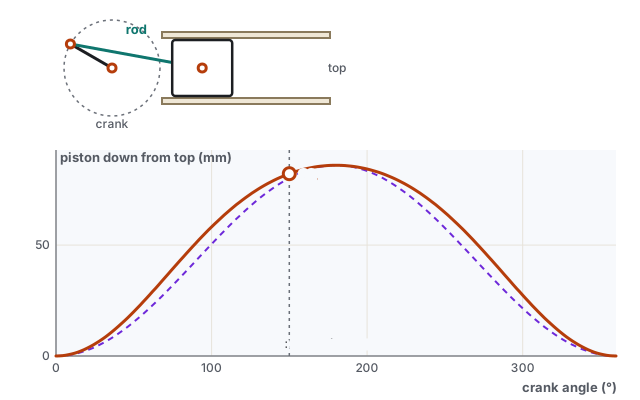
Crank and piston: turning rotation into back-and-forth
A crank turns a circle into a straight-line stroke. The connecting rod bends the motion away from a pure sine wave.
 Linear Equations
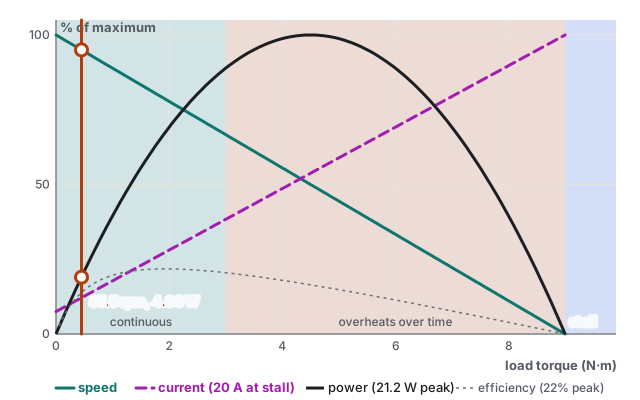
DC motor torque–speed curve: where it runs, peaks, and stalls
Load a DC motor and its speed falls in a straight line to stall. Power peaks at half speed, and efficiency peaks at light load.
 Matrices
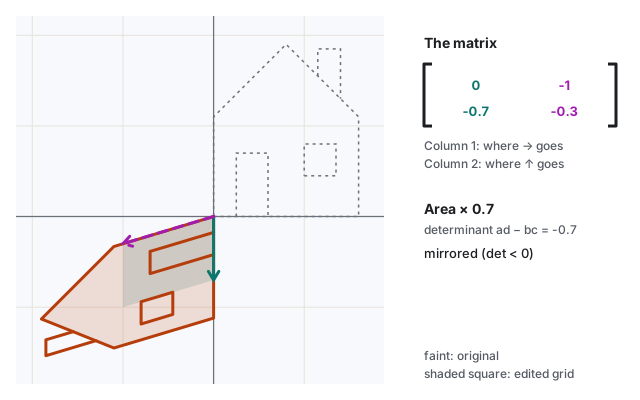
Photo edits are matrices: rotate, flip, stretch, and slant
Every rotate, mirror, and stretch in a photo app is four numbers. Multiply each point by them and the picture moves.
 Polynomials
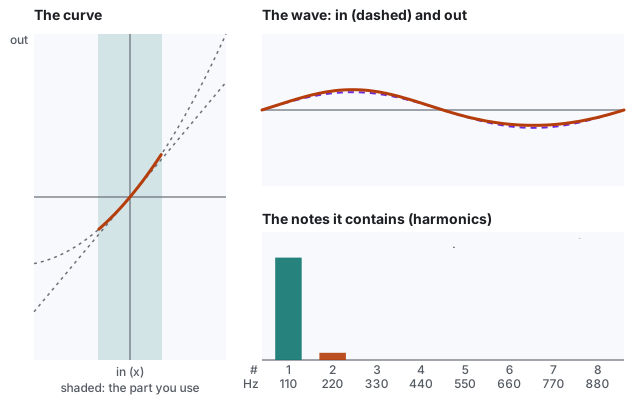
Why a distortion pedal changes the sound: polynomials make harmonics
Push a pure note through a curve like x − x³/3 and new notes appear. The cube is where the extra harmonics come from.
 Exponents & Logarithms
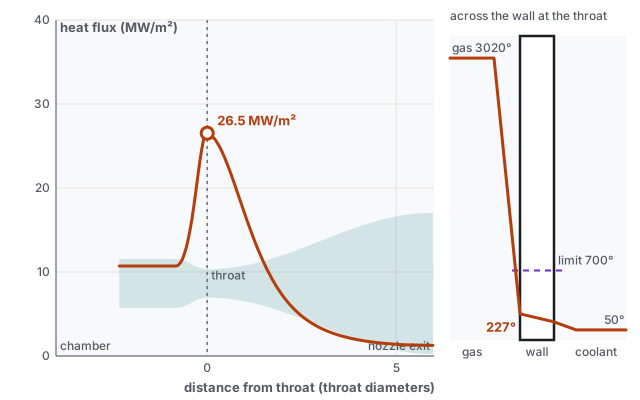
The Bartz equation: how regenerative cooling keeps a rocket throat from melting
Heating grows with chamber pressure to the 0.8 power and peaks at the throat. The fuel flows through the wall to carry it away.
 Calculus (intro)
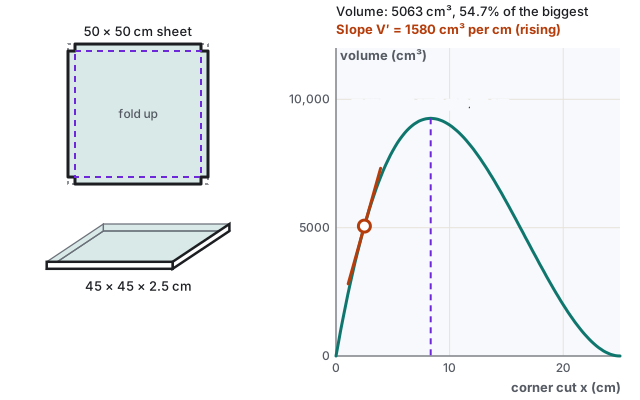
The biggest box from a sheet of cardboard: optimization
Cut a square from each corner and fold up the sides. Too small a cut makes a flat tray, too big a skinny tower. The derivative finds the best cut.
Formula families
Related
- Linear Equations
- Ratios & Proportions
- Trigonometry
- Exponents & Logarithms
- Arithmetic & Number Sense
- Differential Equations & Transforms
- Geometry
- Vectors
- Probability
- Quadratics
- Matrices
- Polynomials
- Calculus (intro)
- Electrical & Electronics
- Aerospace
- Physics
- Civil & Construction
- Art & Design
- Computer Science
- Mechanical
- Trades
- Biology
- Music & Sound