Computer Science
The math inside computers and games
9 live exhibits. Each one already works. Change a number and see what happens.
Open as board Play with these together. Solving one grows related exhibits.
 Probability
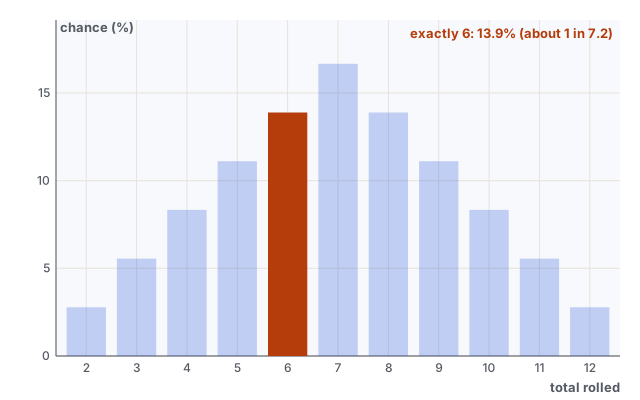
Dice odds: what are my chances of rolling it?
Why 7 shows up so often with two dice, and what that means for your next move.
 Linear Equations
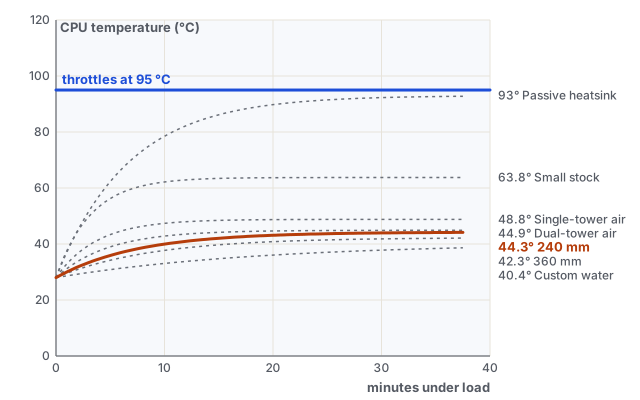
PC cooling: passive, air, or water?
Heat flows through the cooler like current through a resistor: temperature rise = watts × °C/W. Water adds mass, so it heats up slower.
 Ratios & Proportions
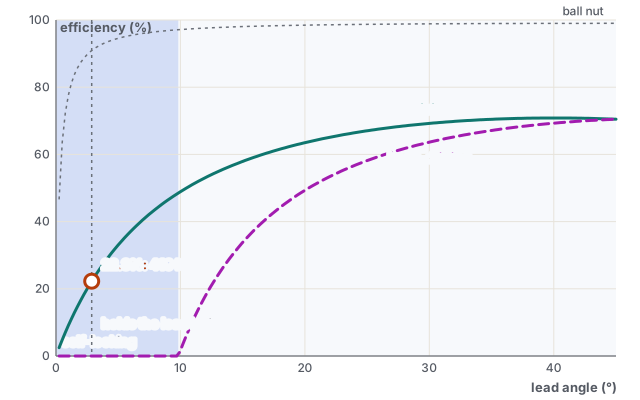
Lead screw vs. ball screw: turning torque into a push
A screw trades turns for force: F = 2π × efficiency × torque ÷ lead. Friction decides whether it also holds the load with the power off.
 Statistics
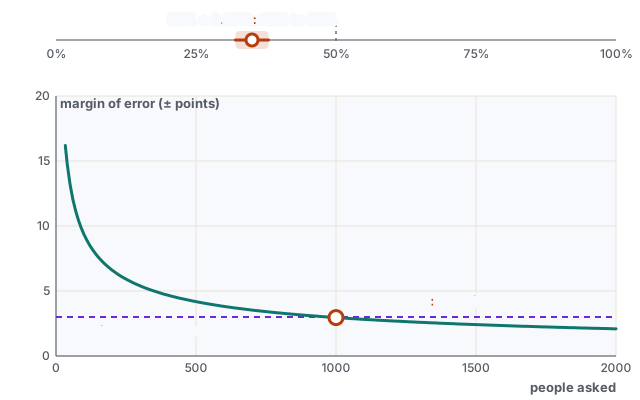
Poll margin of error: why about 1,000 people gives ±3%
The margin shrinks with the square root of the sample. Four times the people only halves it.
 Probability
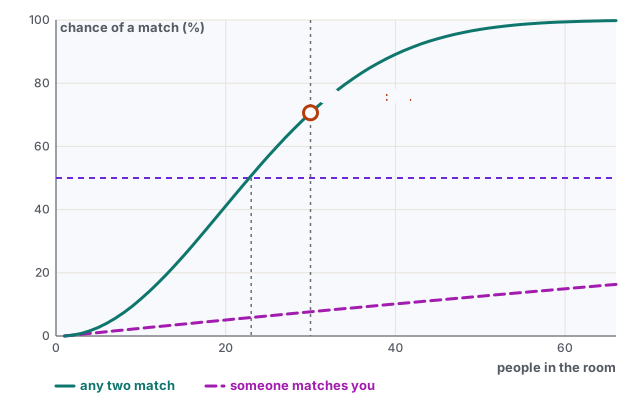
The birthday problem: 23 people is a coin flip
In a room of 23, it’s better than even that two share a birthday. Every pair is a chance, and pairs add up fast.
 Probability
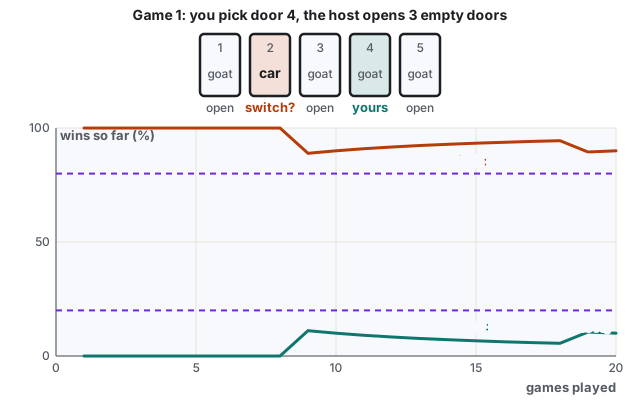
Monty Hall: should you switch doors?
Pick a door, watch the host open an empty one, then decide. Switching wins two times out of three, and here you can watch it happen.
 Statistics
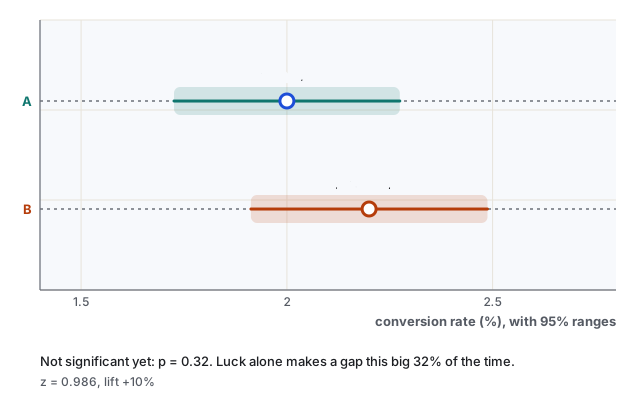
A/B test: is version B really better, or just lucky?
A higher conversion rate might be chance. The z-test turns the gap and the sample size into a p-value.
 Matrices
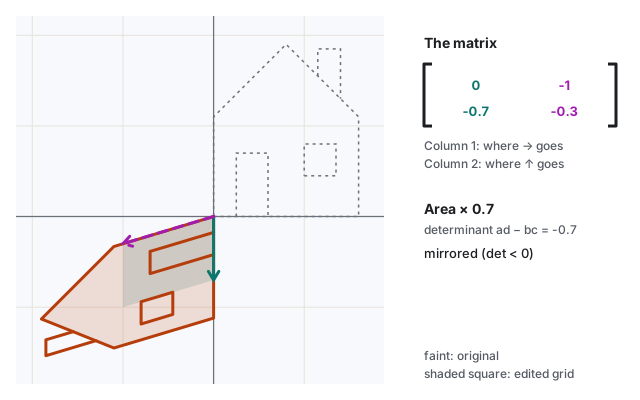
Photo edits are matrices: rotate, flip, stretch, and slant
Every rotate, mirror, and stretch in a photo app is four numbers. Multiply each point by them and the picture moves.
 Matrices
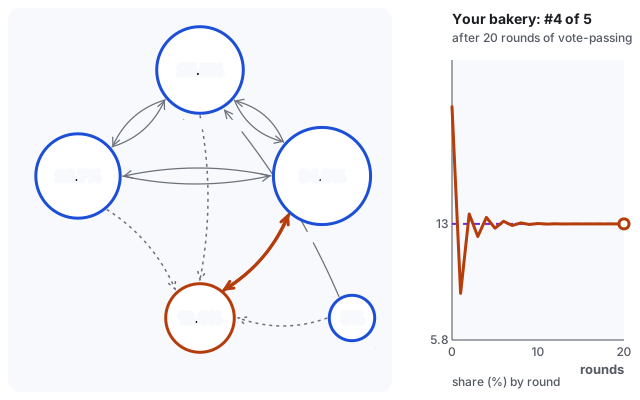
How search ranks pages: links as votes (PageRank)
A link is a vote, and votes from important pages count more. Repeat until it settles and you get PageRank.