How do you calculate flight time and fuel needed?
Divide distance by groundspeed to get time en route, then multiply time by the fuel burn per hour. Add fuel for start, taxi, and run-up, plus the reserve: 30 minutes for day VFR and 45 for night VFR or IFR under US rules. If you'd land below the reserve, plan a fuel stop.
- Time en route
- 1 h 15 min
- Fuel en route
- 8.75 gal
- Fuel required with reserve
- 13.7 gal
- Flying time left on landing
- 102 min
E6B: Training aid only, not for navigation or flight. Verify with your POH/AFM and approved sources.
More settings
Play
Shrink the groundspeed with a headwind. Watch the reserve disappear.
Stuck? Pick one of the examples from the “Try an example” menu, or press “New example.”
Understand
Two ratios do all the work. Groundspeed is distance per hour, so
and fuel burn is gallons per hour, so fuel en route is .
The bar stacks what you need: taxi, the flight, and the reserve. The line is what's in the tanks. If the line falls short of the bar, the plan doesn't work.
Use
Every input has a unit menu, so you can type values in the units you already have. Results follow your units.
Show the work
- Time = distance ÷ groundspeed
t = \frac{150\ \text{nm}}{120\ \text{kt}} = 1.25\ \text{h} - Fuel = time × burn
1.25 \times 7 = 8.75\ \text{gal} - Reserve
\frac{30}{60} \times 7 = 3.5\ \text{gal} - Required = taxi + en route + reserve
1.4 + 8.75 + 3.5 = 13.65\ \text{gal}
Export
Enter distance, groundspeed (from the wind triangle tool), fuel burn from your POH cruise chart, and usable fuel on board. Pick the reserve in "More settings."
- Climb burns more than cruise. Many POHs list extra fuel for the climb.
- Headwinds often turn out stronger than forecast. Check fuel against the plan in flight.
For learning and estimation. Verify with applicable codes, standards, and a qualified professional before using in design, construction, or safety-critical work.
Cheat card
| Symbol | Meaning | Unit |
|---|---|---|
| distance | nm | |
| groundspeed | kt | |
| fuel flow | gal/h |
- Use groundspeed, not airspeed. A 20 kt headwind on a 110 kt airplane adds about 22% to the time and fuel.
- US minimum reserves are 30 minutes day VFR and 45 minutes night VFR or IFR (14 CFR 91.151, 91.167).
- Only usable fuel counts. Check the POH for unusable fuel.
Where it’s used
- Aerospace
Every cross-country flight plan works out time and fuel for each leg this way. - Driving & Travel
The same time-speed-distance ratio plans road trips and boat trips.
Related exhibits
 Start here
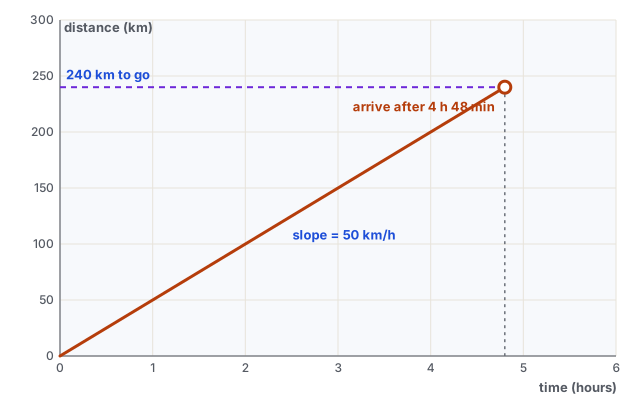
Speed, distance, time: how long is the drive?
Distance is speed times time. Rearrange it and you know when you’ll arrive.
 Go further
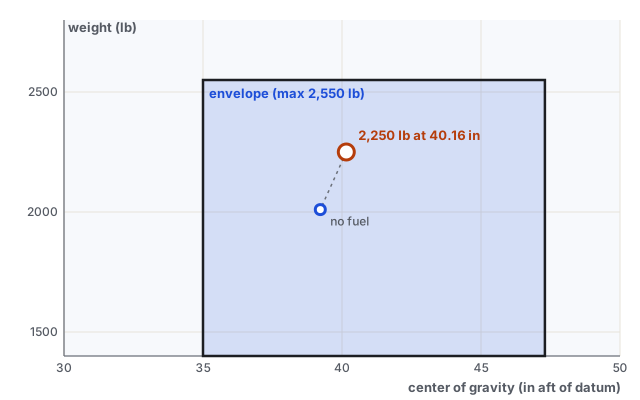
E6B weight and balance: where the center of gravity lands
The CG is a weighted average. Load people, bags, and fuel, and watch the dot move in the envelope.
 Also try
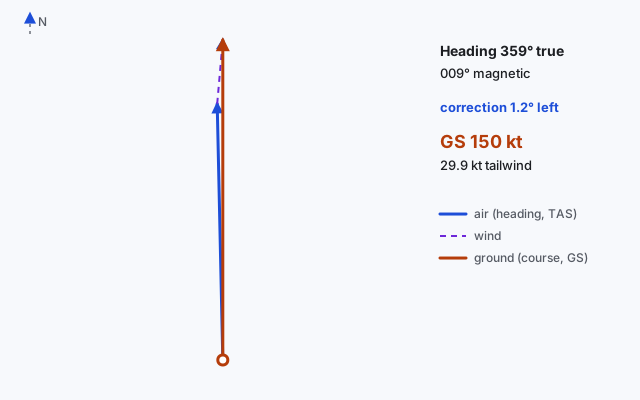
E6B wind triangle: heading and groundspeed
Point the nose into the wind just enough to track your course. Three vectors, one triangle.
 Also try
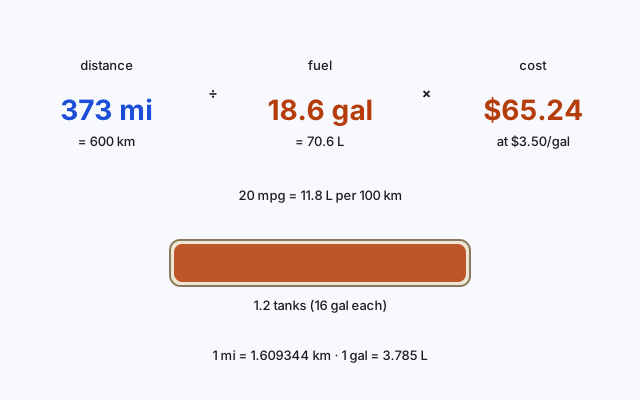
Road trip math: miles, liters, and dollars
Convert once and the trip adds up: how far, how much fuel, how much money.
Questions people ask
How do you calculate fuel for a flight?
Time en route is distance ÷ groundspeed. Multiply by fuel burn. Then add taxi fuel and the required reserve. 240 nm at 115 kt is about 2.1 h; at 8.5 gal/h that's 17.7 gal, plus about 1.4 for taxi and 4.25 for a 30-minute reserve.
What are the VFR fuel reserve requirements?
In the US, enough to fly to the destination and then 30 more minutes by day or 45 at night at normal cruise (14 CFR 91.151). IFR requires reaching the destination, any alternate, and then 45 minutes. Many pilots use an hour as a personal minimum.
Why use groundspeed instead of airspeed?
Fuel burns by the hour, and hours depend on how fast you cover ground. A headwind lowers groundspeed, so the same trip takes longer and burns more.