Game math
Press start: the math inside games
The math inside your favorite games: dice, loot drops, critical hits, ratings, jumps, hitboxes, 3D cameras, and world seeds. Change the numbers and watch the game math happen.
Level select
World 1-1
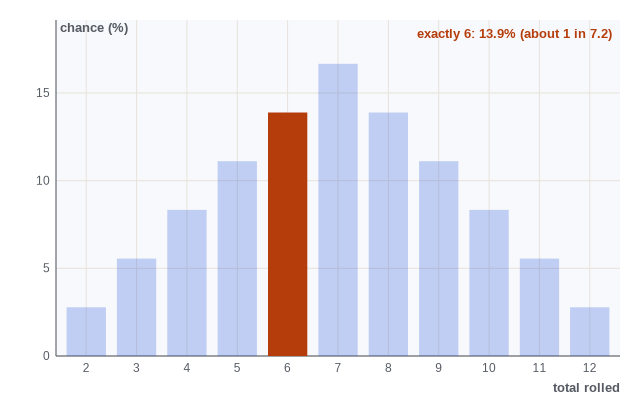
Dice odds: what are my chances of rolling it?
Why 7 shows up so often with two dice, and what that means for your next move.
World 1-2
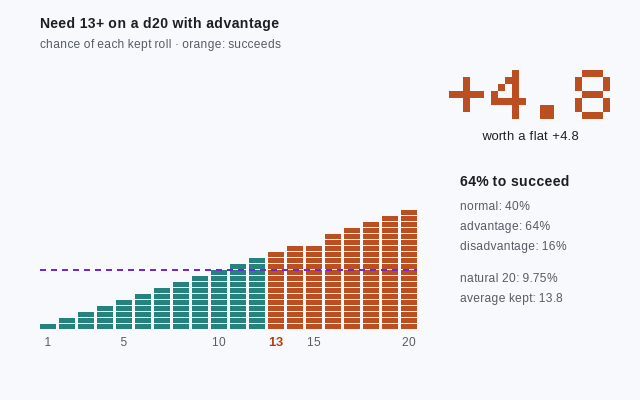
Advantage on a d20: how much is rolling twice worth?
Roll two d20s and keep the higher. It’s worth about +5 when you need an 11, but only +1 when you need a 20.
World 1-3
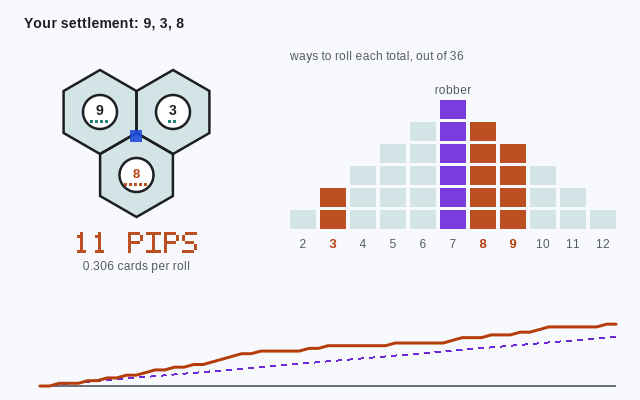
Catan dice: which settlement spots really pay?
Two dice make 7 most often and 2 or 12 least. Count the pips on a spot and you know how many cards it will hand you.
World 1-4
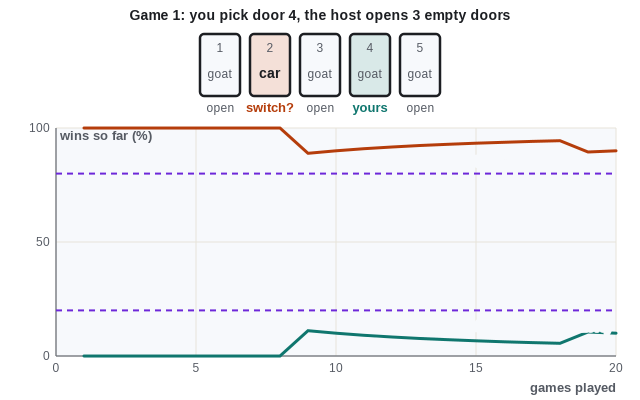
Monty Hall: should you switch doors?
Pick a door, watch the host open an empty one, then decide. Switching wins two times out of three, and here you can watch it happen.
World 2-1
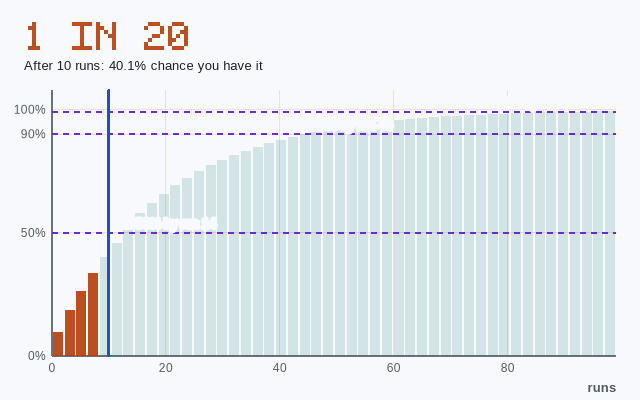
Loot drops: why a 1% drop doesn’t mean 100 tries
Each run is a fresh roll, so after 100 tries at 1% over a third of players still have nothing. A pity timer is the fix.
World 2-2
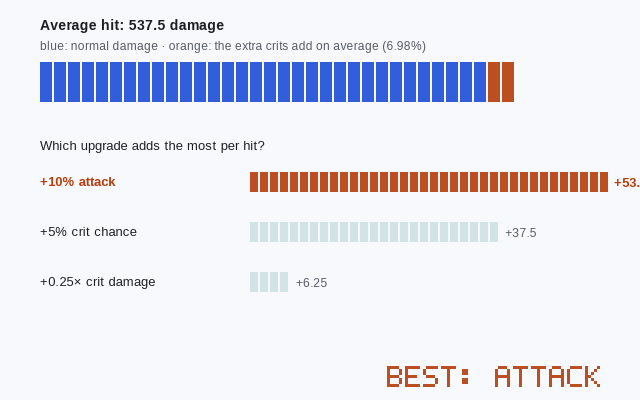
Crit chance vs. crit damage: which upgrade hits harder?
Your average hit is damage × (1 + chance × (multiplier − 1)). Compare upgrades on that one number and the best pick is obvious.
World 2-3
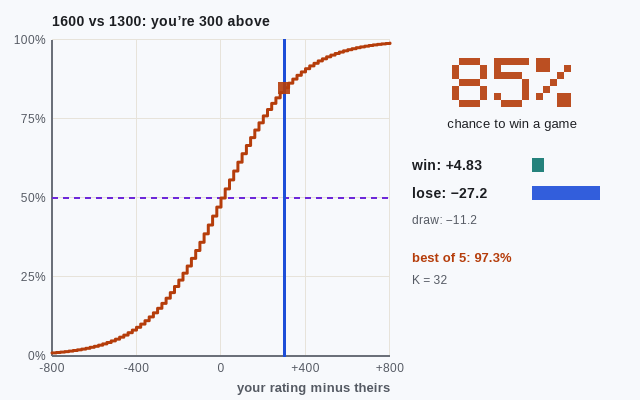
Elo ratings: how matchmaking predicts who wins
Every 400 points of rating gap multiplies the odds by 10. Beat someone better and you take more of their points.
World 3-1
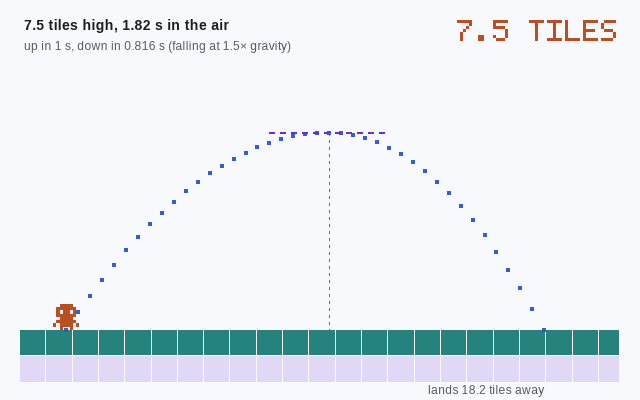
Tuning a platformer jump: why some jumps feel floaty
Jump height is speed² ÷ 2 × gravity. Game designers tune those two numbers, and often make you fall faster than you rise, so the jump feels just right.
World 3-2
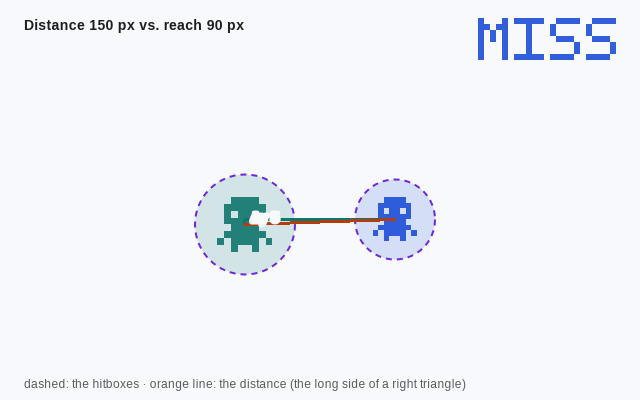
Hitboxes: how a game knows you got hit
Games wrap every character in an invisible circle or box. A hit is just a distance check, and the Pythagorean theorem does the work.
World 3-3
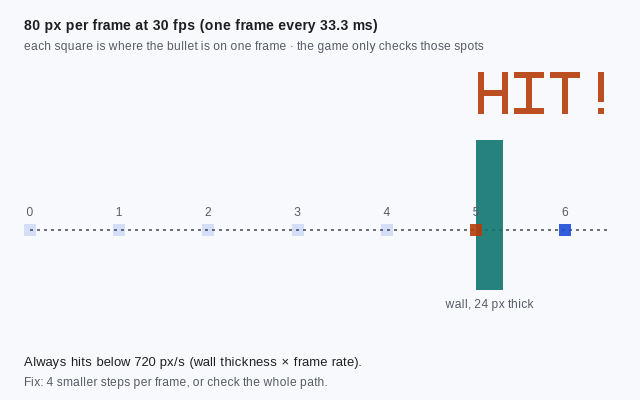
Why fast bullets pass through walls: tunneling
Games move things in jumps, one per frame. If a bullet jumps farther than the wall is thick, it can skip right over it.
World 3-4
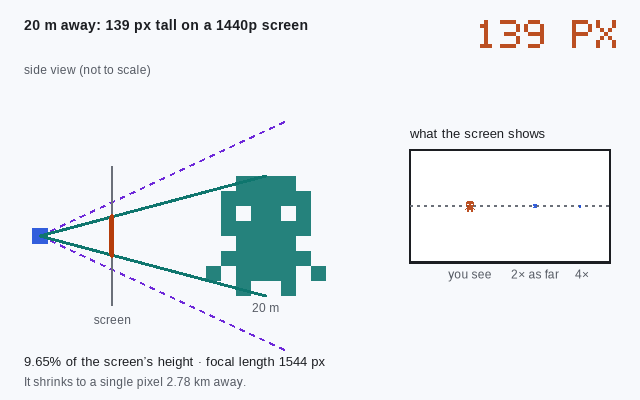
Why far things look small: how 3D games draw a flat screen
Size on screen = focal length × real size ÷ distance. Twice as far looks half as big, and the FOV slider in your settings changes the focal length.
World 3-5
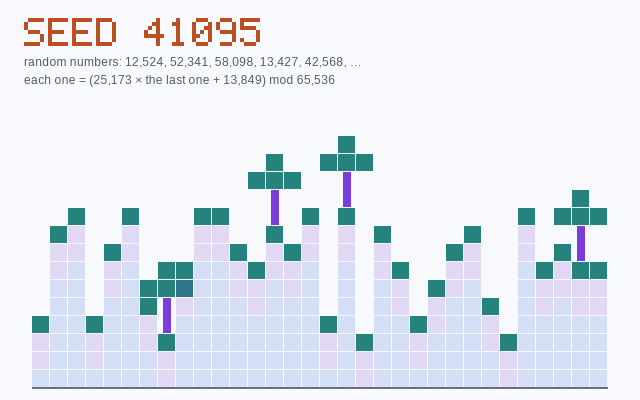
World seeds: how one number builds a whole world
Games make “random” numbers with a formula: multiply, add, keep the remainder. Start from the same seed and you get the same world, block for block.
World 4-1
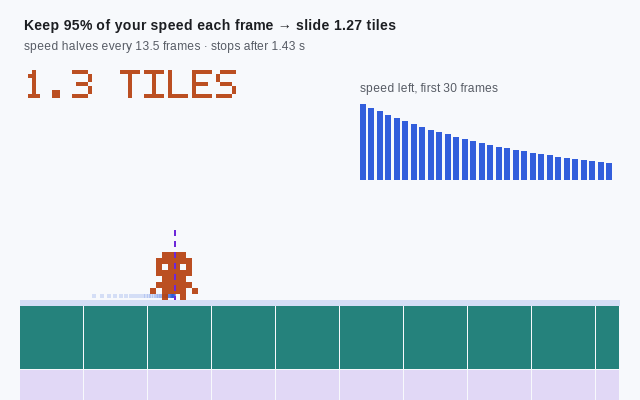
Ice levels: why you slide so far
Games shrink your speed by a fraction every frame. Keep 90% and you stop fast; keep 98% and you slide five times as far.
World 4-2
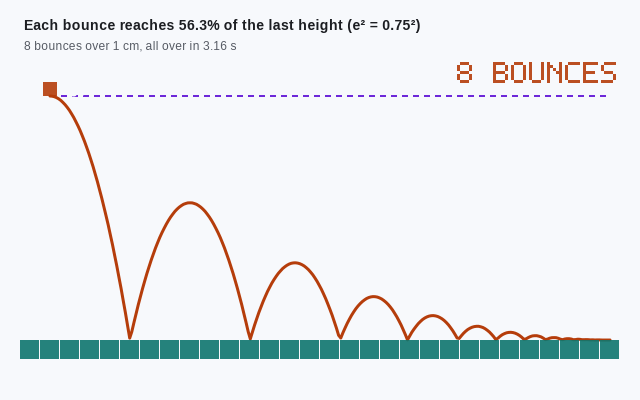
Bounce: how many bounces until it stops?
Every bounce keeps a share of the speed, so each one is a fixed fraction of the last. The bounces never quite end, yet the ball still stops in a few seconds.
World 4-3
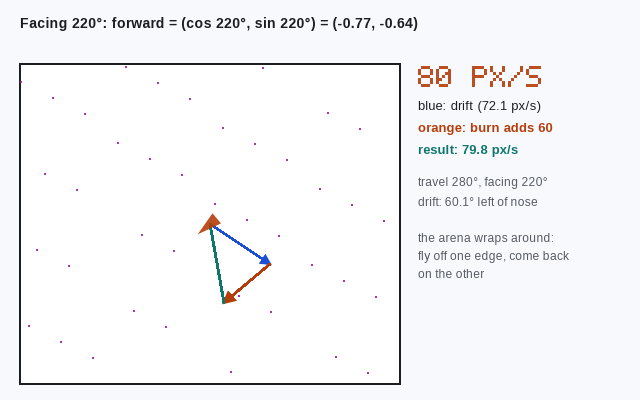
Turning your spaceship: where “forward” comes from
Point the ship at an angle and forward is (cos θ, sin θ). Thrust adds to the speed you already have, so in space you drift.
World 4-4
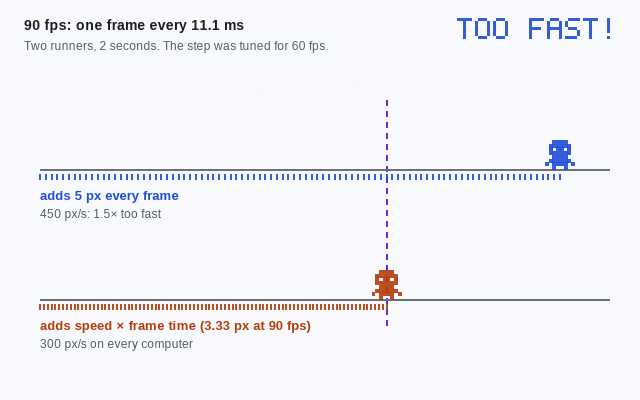
Frame rate: why some games go slow-mo when they lag
Move 5 pixels every frame and your speed depends on the frame rate. Multiply by the time per frame instead, and every computer runs the same speed.
World 4-5
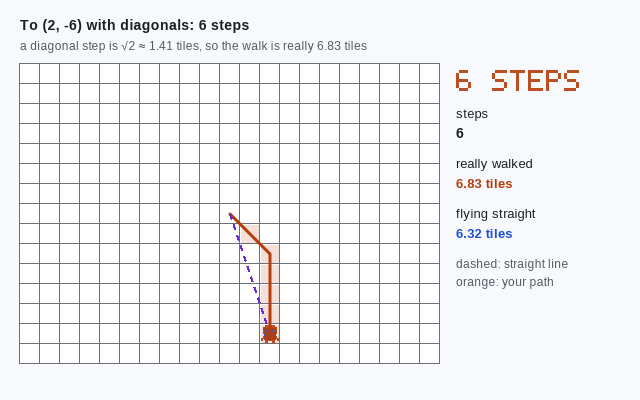
Grid movement: walking, diagonals, and flying
Without diagonals you walk |Δx| + |Δy| steps. With them it’s fewer steps, but each diagonal is √2 tiles long, about 1.41.
★ Bonus level
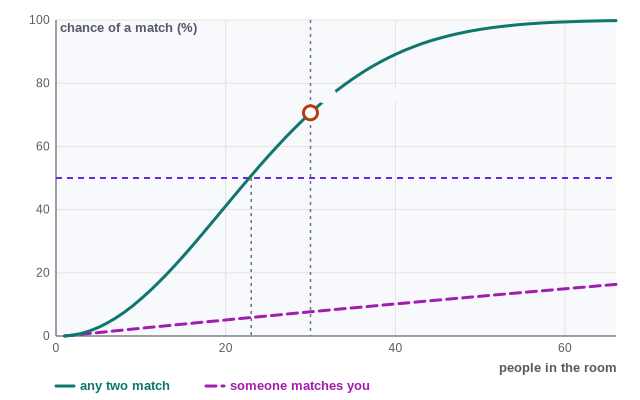
The birthday problem: 23 people is a coin flip
In a room of 23, it’s better than even that two share a birthday. Every pair is a chance, and pairs add up fast.
★ Bonus level
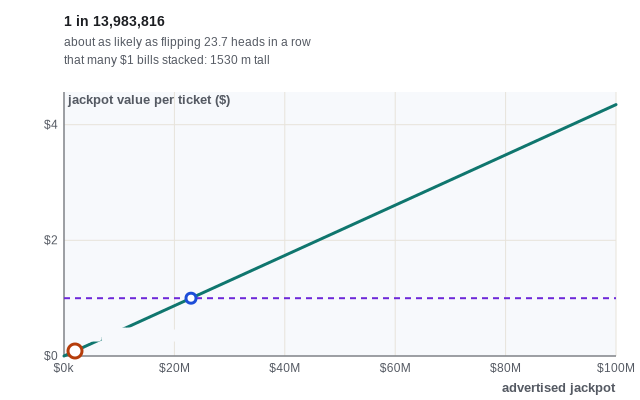
Lottery odds: what is a ticket really worth?
Powerball is 1 in 292 million. Multiply the chance by the prize, after the lump sum, taxes, and splitting, and see what $2 buys.
Questions
Is this about gambling?
No. It is about the probability and design math that makes games fair, fun, and balanced. Where real money is involved, like the lottery, the exhibit shows why the odds favor the house.
Are these the real numbers from specific games?
The rules are the real ones for tabletop games like D&D and Catan. For video games, drop rates and damage formulas vary by game, so the exhibits use typical numbers you can change to match yours.
Who is it for?
Players who want to know if a choice is really better, students who learn best with something fun, and anyone designing their own game.